Romy Cartelli
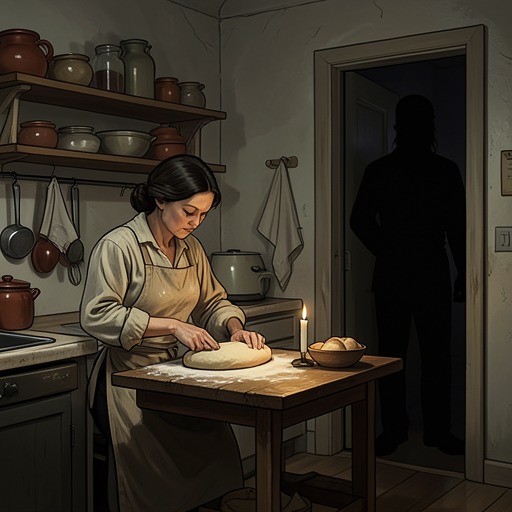
Of Fates & Fables (The Complete Series)Romy Cartelli is the central protagonist of the series and the figure behind the “The Girl Who Cried Werewolf” label. Introduced as a professional book blogger with a taste for provocative online performance, she turns an impossible discovery into a public campaign, survives kidnapping and forced transformation, and ultimately claims a place within the werewolf community without surrendering the voice that made her an outsider. Her decisive significance lies in the way she converts disbelief, humiliation, and captivity into evidence, resistance, and collective action.
Identity and Public Persona
Romy’s public identity begins with her channel, Romy Reads Romance, where romance fiction, book-boyfriend enthusiasm, and sensational investigation overlap. Her livestreams are carefully staged rather than impulsive accidents: she checks that the camera is recording, smiles for followers, and recognizes that the material is too strange for her audience to ignore. When she prepares a major announcement, she presents her discovery that werewolves exist as the discovery of the century and frames the revelation through the language of online intimacy, addressing her followers as a community of “book boos” and “book boyfriends.”
That performance becomes a trap when public attention turns against her. The “The Girl Who Cried Werewolf” hashtag trends and acquires spoof accounts on Instagram and Twitter, where memes and hostile reactions recast her testimony as entertainment. The label does not merely threaten her reputation; it weakens the credibility on which any future warning depends. When Brody Harrison tells her that the public will not believe she has disappeared a second time, he predicts that captivity will become another discrediting story: even escape would leave her as “the girl who cried captive.” Romy’s conflict is therefore fought simultaneously in physical spaces and in the mediated space where other people decide what kind of person she is.
Investigation and Resistance
Romy’s determination to prove the supernatural is inseparable from her willingness to use media as a weapon. She records evidence, revises images, and prepares posts with an investigator’s attention to visibility. In one post, she crops a photograph and adjusts its lighting so that people from Delta can be seen clearly, turning a private image into material that might expose them. Later, she proposes a more aggressive strategy by using a celebrity werewolf insinuation to revive public interest in the possibility that werewolves are real. The post deliberately links a familiar celebrity image to the claim that “book boyfriends” may also be werewolves, using humor, hashtags, and spectacle to force the subject back into circulation.
Her most revealing public statement comes when she records a drunk video about the missing girls. Romy admits that the truth sounds absurd even to her: werewolves are kidnapping girls to breed wolf cubs. She cannot make a direct accusation without exposing Kash Montgomery or making him appear guilty, so she converts the video into a time capsule of proof. The gesture captures her method: when ordinary institutions and immediate audiences cannot receive the truth, she creates a future witness. Her confidence is comic and defiant, but the underlying purpose is grave. She wants later recognition to establish that disbelief did not mean she was wrong.
The same resourcefulness appears under direct threat. During captivity, Romy does not accept the role assigned to her by her captors. The later account of her ordeal emphasizes that she uses her wits and questionable charm to learn their secrets and tries to save more than herself. Her abduction therefore becomes an investigative position as well as a condition of vulnerability. She is a prisoner, but she is also gathering knowledge about the people who imprisoned her, turning information into a possible route toward rescue and wider protection.
Transformation and Embodied Agency
Romy’s transformation radically alters her body while preserving the continuity of her resistance. After the witch’s intervention and Brody’s bite, Kash Montgomery seals his venom inside her body. When the fire recedes, Romy discovers red fur covering her entire four-legged body, and the memory of the preceding violence returns at once. The scene joins supernatural change to bodily shock: she does not approach werewolf existence as an abstract identity or a romantic fantasy, but wakes into it through pain, altered anatomy, and the compressed recollection of those who changed her.
Yet Romy refuses to treat being bitten as proof that she does not belong. Confronting Brody, she insists that whether she was bitten or born, she was meant for this life, for these people, and for Kash. Her claim is significant because it rejects the pure-blood hierarchy that seeks to define legitimacy through origin. Transformation does not erase her agency or make her a lesser member of the community; instead, she uses the condition imposed on her to articulate a chosen belonging.
Her new body also brings a new capacity. Talia DuPont reveals that Romy can control werewolves with her mind, a power associated with compulsion. Romy understands it as a means of protecting herself and her friends, and the possibility of ending the conflict becomes more immediate once she can defend herself through this ability. The power is not presented merely as an impressive supernatural gift. It changes the balance between captor and captive, gives Romy leverage against coercive authority, and lets her answer the control previously exercised over her body and movement.
Relationships and Allegiance
Kash’s recognition of Romy as his mate is one of the central changes in her position. He says he felt the bond when she threw her shoe at him in the alley and turned to find her full of fire and determination. Romy’s response is a stunned self-identification: she is Romy Cartelli, Kash Montgomery’s mate. The bond brings intimacy and protection, but it also raises the stakes of every decision. Kash explains that she has become his life and reason for existing, and that keeping her safe matters more to him than his own life. Romy is therefore not simply the object of a romantic claim; she becomes the person whose danger reorganizes Kash’s obligations and choices.
The relationship nevertheless exists within Romy’s broader network of chosen allies. Her connection with Talia is both friendship and combat partnership, and Talia’s excitement about Romy’s ability is balanced by the awkward fact that she reveals a secret that was not hers to tell. Romy’s trust is similarly tested by her contact with Justice Erikson. She reaches for Justice’s arm warily, a small gesture that carries the history of coercion, suspicion, and attempted alliance. Her ability to stand beside him despite that tension shows that solidarity in the pack is built through dangerous, imperfect acts rather than effortless confidence.
Romy’s bond with Kash also places her directly against Brody Harrison. Brody’s captivity, threats, and attempt to define her publicly as unbelievable make him both a personal enemy and the architect of a system that turns women into bodies for forced breeding. Romy’s opposition to him is consequently larger than revenge. She seeks to expose what he is doing, protect the missing girls and captives, and prevent him from taking territory and power through violence.
Leadership and Ending Position
By the later stages of the conflict, Romy has moved from seeking proof for skeptical followers to speaking within a political and military struggle. She watches Kash take his place as alpha and leader, feeling pride while he looks back toward her rather than addressing the assembled group alone. Her position at the edge of the gathering does not make her passive. When the council fails to intervene, Romy identifies its members as politicians who hope the crisis will resolve itself so they can keep their hands clean. She rejects that evasion and declares that the fight belongs to them and that the pack will be ready when Brody comes.
Her physical resistance is equally direct. When her hands close around Brody’s arm, his surprise gives her the opening she needs, and she squeezes hard. The gesture condenses her wider arc: a person once stalked, dismissed, abducted, and controlled now creates the opening herself. She does not defeat the system through publicity alone, nor through supernatural power alone, but by combining observation, performance, bodily courage, loyalty, and timing.
The later descriptions of Romy’s story continue to define her through escalation rather than retreat. The first installment presents her as a blogger trying to prove that her sexy werewolf stalker may be a murderer while recovering from the consequences of telling her followers that werewolves exist. The captivity narrative then makes kidnapping another condition she refuses to let determine her. With graduation approaching, the final phase places her among people forced to decide how far they will go for their happily ever after. Romy’s ending position is therefore not a return to ordinary life. She remains a public storyteller, a transformed werewolf, Kash’s mate, a defender of her friends, and a participant in the war whose weight she must learn to share.
Narrative Role and Thematic Significance
Romy’s narrative role depends on the tension between visibility and credibility. She is constantly producing images, livestreams, hashtags, and explanations, yet every attempt to make the truth visible can be absorbed as gossip, parody, or proof of instability. The spoof accounts and the “girl who cried” labels show how quickly a platform can reverse authorship: the person telling the story becomes the story’s object. Romy’s resistance consists partly in taking those labels back and forcing them to carry the evidence they were meant to dismiss.
Her arc also joins technology and bodily transformation without treating either as a simple escape from the other. The red recording light, the replaced phone, the carefully edited photograph, and the Instagram campaign are tools through which Romy manages audiences and creates witnesses. Her red-furred wolf body and mental compulsion are equally consequential, but neither replaces the communicative intelligence she already possessed. The transformed heroine remains a mediated, relational figure whose identity is formed through devices, supernatural bonds, hostile institutions, and chosen family.
Most importantly, Romy’s courage is not the absence of fear or doubt. She knows that her claims sound unbelievable, that public opinion can turn cruel, and that captivity may be used to discredit her a second time. She acts anyway, preserving proof when immediate belief is impossible and choosing belonging when powerful enemies define legitimacy by blood. Her significance lies in that refusal to let another person’s narrative become the final account of her life.